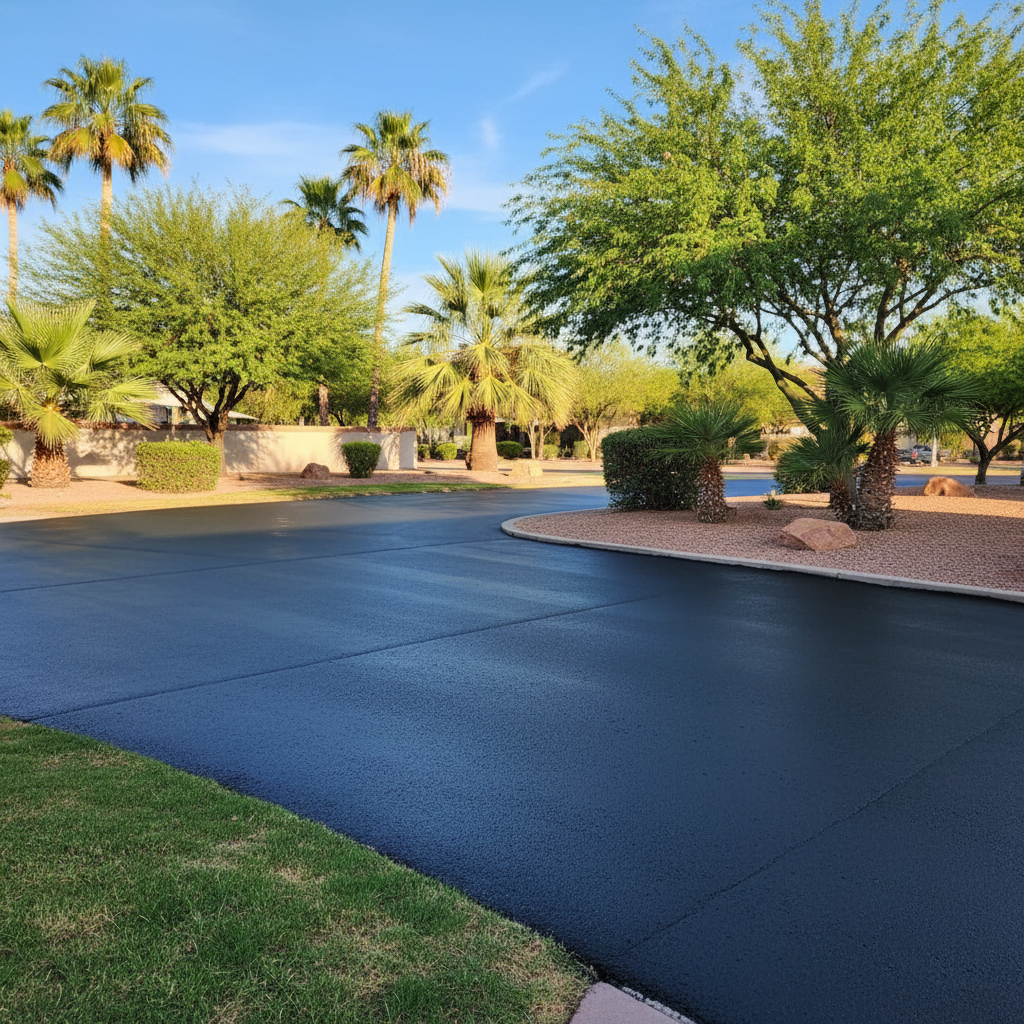
So, you've put money into sealcoating your asphalt driveway or parking lot here in Mesa. Good call! It's really one of the best ways to protect your pavement from the sun, water, and everyday traffic. But getting it done is just the first step. If you want that fresh, black finish to last and actually do what it's supposed to, you've got to take care of it. Think of it like getting a new coat of paint on your house – you wouldn't just ignore it afterward, would you?
Making Your Sealcoat Last: It's All About Protection
The biggest enemy of asphalt in Arizona isn't just heavy trucks; it's our constant sun and those wild temperature swings. That UV radiation literally bakes the oils right out of the asphalt, making it brittle and easy to crack. Sealcoating puts a protective layer over everything, but it's not magic. Here's what I tell folks to do:
- Let it Cure: This is super important. After we put down a fresh sealcoat, you absolutely cannot drive on it for at least 24-48 hours. Sometimes it needs even longer if it's cooler or more humid, which isn't a common issue here in Mesa, but it does happen. If you drive on it too soon, you'll leave tire marks, scuff it up, and mess with how well it sticks. It's just like walking on wet paint, really.
- Watch for Leaks: Oil, gas, and other car fluids are sealcoat destroyers. They break down the stuff that holds the asphalt together. If you've got a car that leaks, try to get it fixed. In the meantime, throw down some cardboard or an oil drip mat where it usually parks. If something spills, clean it up fast with an absorbent material like cat litter, then gently scrub with some mild detergent and water. Don't let it sit there.
- Avoid Heavy Point Loads: Try not to park heavy equipment, trailers with small wheels, or anything that puts a lot of pressure on a tiny spot for long periods. That can dent or even crack the sealcoat.
- Don't Use Harsh Chemicals: Stick to water and mild detergents for cleaning. Strong solvents or degreasers will just strip away the sealcoat.
Regular Maintenance: Simple Steps for Long-Term Health
You don't need to baby your driveway, but a little regular attention really goes a long way. This isn't rocket science, just good old common sense:
- Keep it Clean: Sweep off dirt, leaves, and debris regularly. Especially after a monsoon storm, you'll find a lot of grit and sand that can act like sandpaper under tires. A leaf blower works wonders for this.
- Deal with Weeds: Weeds pushing through cracks are a common sight, especially in older asphalt. They can make existing cracks wider and even create new ones. Pull them out by hand or use a targeted weed killer. Just be careful not to spray broad-spectrum herbicides all over your sealcoat.
- Check for Cracks (and Fill 'em): Even with sealcoating, small cracks can pop up over time because of ground movement or temperature changes. This is especially true in areas with expansive clay soils, which we definitely see in some parts of Mesa, like around the Red Mountain area. Don't ignore them. Fill small cracks quickly with a good quality crack filler. This stops water from getting underneath the asphalt, freezing (rare here, but it happens!), expanding, and causing much bigger problems. Water is the ultimate enemy of pavement, after all.
Warning Signs: When Your Sealcoat is Crying for Help
Your driveway will tell you when it needs attention. You just have to know what to look for:
- Fading Color: This is the most obvious sign. If your beautiful black driveway is starting to look gray and dull again, the sealcoat is wearing thin and losing its protective qualities. This is usually the first hint that it's time to think about putting another coat down.
- Surface Deterioration: Are you starting to see small aggregate (the little stones in the asphalt) peeking through? Is the surface getting rough or sandy? That means the top layer of asphalt is eroding, and the sealcoat is gone.
- Increased Cracking: While some minor cracks are normal, if you're seeing a lot of new cracks, or existing ones are getting wider fast, your sealcoat isn't doing its job anymore, and the asphalt underneath is taking a beating.
- Potholes or Depressions: These are bigger problems than just sealcoat failure. They tell you there are structural issues with the asphalt base.
When to Call a Professional: Don't Wait Too Long
You can handle the sweeping and the small crack filling, but some jobs are definitely best left to the pros. You should call someone like Alpha Asphalt of Mesa when:
- It's Time to Re-seal: Generally, sealcoating needs to be redone every 2-3 years for residential driveways and more often for busy commercial lots. If you're seeing a lot of fading or surface wear, it's time. Don't wait until the asphalt is really falling apart.
- You Have Significant Cracking: If you've got cracks wider than about a quarter-inch, or a network of spiderweb cracks (what we call alligator cracking), you need professional repair before re-sealing. Just putting sealcoat over these won't fix the underlying problem.
- Potholes or Depressions Form: As I mentioned, these are structural issues. They need proper patching and compaction, not just a pour-over.
- Drainage Issues: If water is pooling on your driveway instead of running off, that's a problem that will lead to early pavement failure. It might need more extensive repair or even re-grading.
Taking care of your sealcoated asphalt isn't a huge chore, but it's really important for getting the most out of your investment. A little proactive maintenance now saves you a lot of money and headaches down the road. Keep an eye on it, and don't hesitate to reach out if you're unsure about something. We're always here to help Mesa homeowners keep their pavement in great shape.