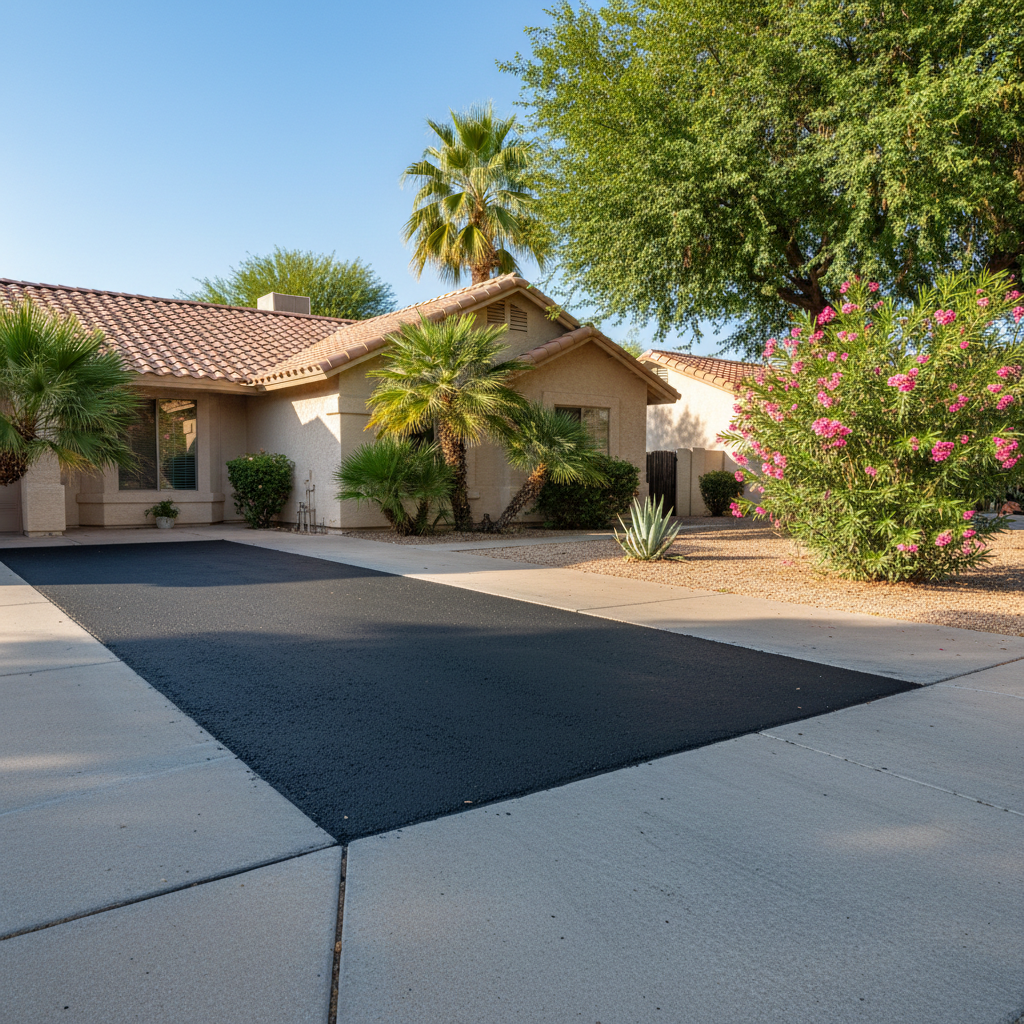
Alright, let's talk asphalt patching. You've got cracks, potholes, maybe some spots that are just crumbling, and you know you need to fix 'em. Good for you for spotting the problem. But here’s where a lot of Mesa homeowners stumble: they rush into a patching project without really knowing what they’re doing, or even worse, they hire the wrong crew. I’ve seen it countless times, and it almost always ends up costing more time and money in the long run.
Mistake #1: Thinking All Patches Are the Same
This is a big one. You might see a contractor offering a super cheap patch job and think, 'Great, a patch is a patch, right?' Nope. There are different kinds of patching, and not every one works for every situation. You’ve got your basic surface patching, which often just means filling a crack or a small pothole with cold mix or a hot pour. That’s fine for quick, temporary fixes. But then there’s cut-and-patch, or what we call 'full-depth repair.' Here, you actually cut out the damaged asphalt section, dig out the base material if it’s messed up, and then lay down new asphalt. If your base is failing – which is pretty common in Mesa with our expansive clay soils that shift when monsoon rains hit – a surface patch is just a band-aid on a broken leg. It won’t last, and you’ll be patching again in a year, guaranteed.
Mistake #2: Not Asking About the Sub-Base
This follows right from the first mistake. A huge red flag? A contractor who doesn't even bring up the sub-base. The asphalt surface is just the top layer, after all. What’s underneath it – that compacted aggregate base – is what gives your driveway or parking lot its strength and stability. If that base is weak, water gets in, it expands and contracts, and your asphalt will fail no matter how well it’s patched. A good contractor, like us at Alpha Asphalt of Mesa, will always check the sub-base, especially for bigger patching jobs. If they’re just looking at the surface and giving you a quote, just walk away. They’re not doing their homework, and you’re going to pay for it later.
Mistake #3: Falling for the 'Too Good to Be True' Price
Who doesn't love a good deal? But with asphalt work, a much lower price usually means someone's cutting corners. Maybe they’re using crummy materials, not prepping the area right, or they’re not even insured. I’ve heard stories about crews showing up in unmarked trucks, doing a quick, shoddy job, taking cash, and then vanishing when the patch fails a few months later. Get multiple quotes, absolutely, but compare apples to apples. Ask what materials they’re using, what their process is, and how long they stand behind their work. If one quote is way, way lower than the others, there’s a reason, and it’s probably not a good one for you.
Mistake #4: Not Checking for Licenses and Insurance
This isn't just about protecting yourself from bad work; it’s about protecting yourself from liability. If a worker gets hurt on your property and the contractor isn’t properly insured, guess who’s potentially on the hook? You are. Always, always ask for proof of licensing and insurance. A legitimate contractor won't have any problem showing you this. If they hem and haw or say they’ll 'get it to you later,' that’s a massive red flag. You want a contractor who’s professional, accountable, and operating legally.
Mistake #5: Ignoring Proper Site Preparation
A good patch job starts with good prep. That means cleaning out the area thoroughly, getting rid of loose debris, and often putting down a tack coat – that’s a sticky asphalt emulsion that helps the new patch stick to the old asphalt. If a crew just dumps some asphalt into a pothole without cleaning it out or putting on a tack coat, that patch is going to pop right out with the first heavy vehicle that drives over it, or even just our intense summer heat. It’s like trying to glue something to a dirty, dusty surface; it just won’t stick. Make sure your contractor explains their prep process, and don't be afraid to ask questions about it.
Look, patching your asphalt isn’t brain surgery, but it’s also not something you want to cheap out on or leave to an amateur. Do your homework, ask the right questions, and make sure you’re hiring someone who knows what they’re doing. It’ll save you a lot of headaches and money down the road, trust me.