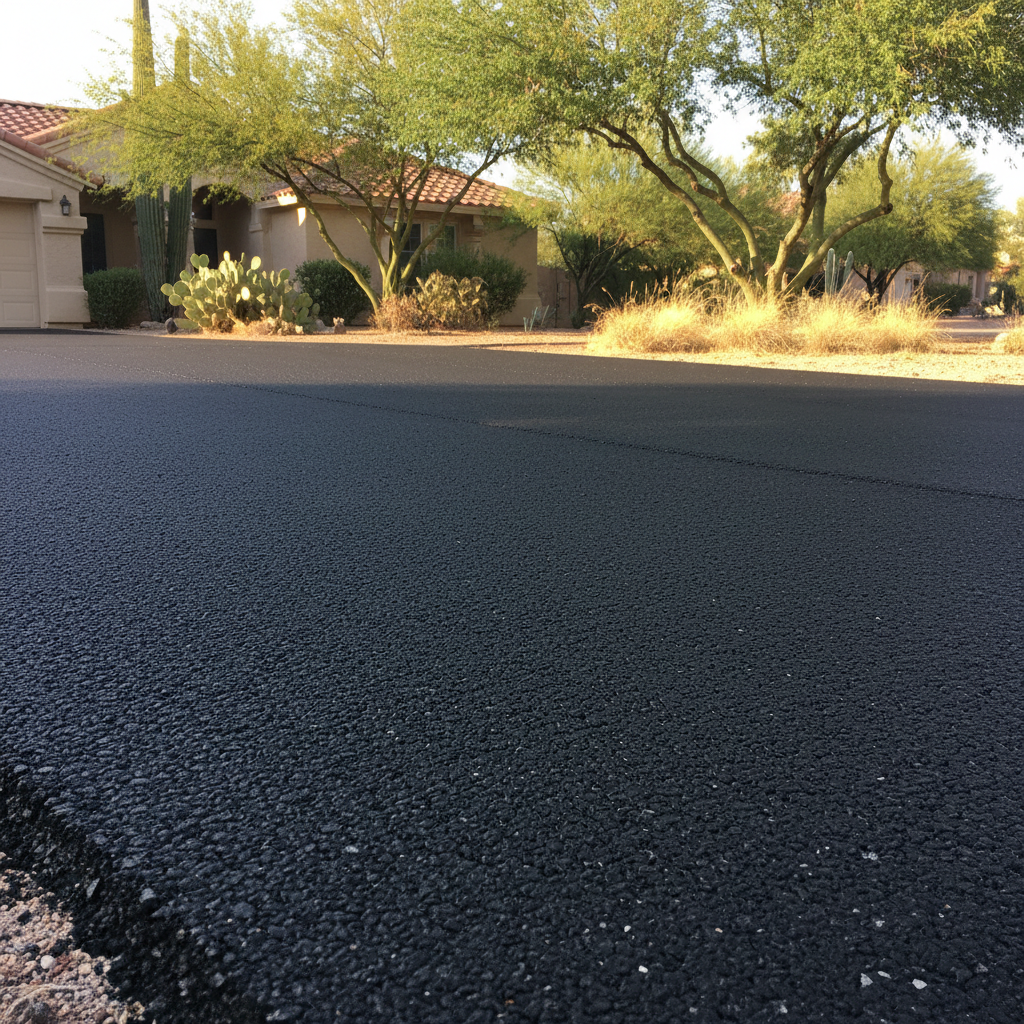
What's the real difference between asphalt and concrete for a residential driveway?
Alright, let's just get straight to it. You're probably trying to figure out if asphalt or concrete is the right choice for your new driveway, right? It's honestly one of the first questions folks ask me. Here's the scoop: both options have their good points and their not-so-good points, and what's "best" really just depends on what you're looking for.
Asphalt, well, that's what I do best. It's flexible, which is a huge advantage here in Mesa. We get those crazy temperature swings, from scorching summer afternoons to chilly winter nights. Concrete can definitely crack under that kind of stress, but asphalt can expand and contract a bit more without breaking. It's also usually quicker to put in, and you can drive on it sooner. Plus, repairs are often easier; we can patch asphalt pretty smoothly. The main drawback? You'll need to seal it every few years to keep it looking good and protected from the sun and any oil drips. Think of it like sunscreen for your driveway, really.
Concrete, on the flip side, is super tough and can last a very long time if it's installed correctly. It's a rigid surface, so it handles heavy loads without much fuss. You can even get it stamped or colored for a different look, which some homeowners really go for. But, if it cracks, those repairs can be pretty noticeable, and replacing a whole concrete driveway is a much bigger project. It's also typically more expensive upfront. For our Mesa climate, especially with those expansive clay soils we have in some spots, concrete needs a really good sub-base and proper expansion joints to stop serious cracking.
How long can I expect my new asphalt driveway to last in Mesa's climate?
That's a completely fair question, and I hear it all the time. You're putting down good money, so you want to know what kind of life you'll get out of it. With the right installation and regular upkeep, an asphalt driveway here in Mesa can easily last you 15 to 20 years, sometimes even longer. I've honestly seen some go 25 years if they're really babied.
The key phrase there is "proper installation and regular maintenance." That means we're putting down the correct base, compacting it thoroughly, and using a high-quality asphalt mix. Then, on your end, it means keeping it clean, sealing it every 2-4 years, and fixing any small cracks or potholes quickly. Our intense Arizona sun and monsoon rains are brutal on everything, including asphalt. The UV rays dry out the binders in the asphalt, making it brittle, and water can seep into cracks, causing much bigger problems. So, that regular sealcoating isn't just about making it look nice; it's truly protecting your investment from our harsh environment.
What kind of prep work is involved before you even lay down new asphalt?
A lot more than most folks realize! You can't just dump asphalt on dirt and call it a day, believe me. The foundation is absolutely everything, especially for something that's going to bear the weight of vehicles day in and day out. First, we'll clear out the old stuff if it's a replacement job, or dig out the area if it's a brand new install. We're talking about digging down to the right depth, usually 8-12 inches, sometimes more depending on the soil and how much traffic it'll see.
Then comes the sub-base. This is typically a layer of compacted aggregate – think crushed rock. We lay it down in lifts, wetting it, and then compacting it with heavy rollers. This creates a stable, well-drained foundation. If your soil is particularly sandy or has a lot of clay, like some of the areas closer to the Superstition Mountains, we might need to add a soil stabilizer or a thicker base layer to prevent shifting and cracking later on. Good drainage is also critical; we make sure the grade is set so water flows away from your house, not towards it. All this prep work is what makes the asphalt last, so we just don't cut corners here at Alpha Asphalt of Mesa.
My driveway has some cracks and potholes. Do I need a whole new driveway, or can it be repaired?
Good question, and the answer is often "it depends." Don't immediately think you need a full replacement just because you see some damage. A lot of common issues can be repaired, which saves you a good chunk of change. Small cracks, especially thin ones, can often be filled with a good quality crack sealant. This stops water from getting in and expanding the crack, which is usually what leads to bigger problems.
Potholes are a bit more involved, but still very repairable. We clean out the pothole, make sure the edges are stable, and then fill it with new asphalt, compacting it down. If you've got a lot of alligator cracking – that's when it looks like a reptile's skin – or if the surface is crumbling in large areas, that might point to a deeper problem with the base. In those cases, we might suggest a larger patch, an overlay, or even a full replacement if the damage is widespread and severe. I'll always come out, take a look, and give you my honest opinion on what makes the most sense for your situation and your wallet.
How long does it take to install a new asphalt driveway, and when can I drive on it?
The actual paving part of a residential driveway usually goes pretty fast. Once all the prep work is done – and that's typically the longest part, sometimes a day or two depending on the size and how complex it is – laying the asphalt itself can often be finished in a single day. For a typical residential driveway, we're talking a few hours for the paving crew to lay it down, smooth it out, and compact it properly.
Now, for the waiting game: you usually need to stay off a fresh asphalt driveway for at least 24 to 48 hours. This gives the asphalt time to cool and harden correctly. It's still curing for weeks after that, so for the first week or two, try to avoid parking heavy vehicles in the same spot for long periods, or making sharp turns with your steering wheel while the car is stationary. That can leave scuff marks or depressions, you know? I'll give you specific instructions when we finish up, but generally, give it a couple of days before you start driving on it regularly.
What kind of ongoing maintenance does an asphalt driveway need?
You've heard me mention it a few times already, but it's worth repeating: maintenance is absolutely key to getting the most out of your asphalt driveway. The biggest thing is sealcoating. I recommend getting your asphalt driveway sealed every 2 to 4 years. This isn't just about looks; the sealcoat protects the asphalt from the sun's UV rays, oxidation, and spills like oil or gasoline. It also helps fill in tiny surface cracks before they become big problems.
Beyond sealcoating, keep an eye out for any new cracks or small potholes. Get those fixed quickly. A small crack fill is cheap and easy; ignoring it can lead to water getting underneath and ruining your base, which means a much more expensive repair down the line. Keep your driveway clean – sweep off debris, leaves, and dirt regularly. If you spill something like oil, clean it up as soon as you can. And try not to overload it with super heavy equipment if it wasn't designed for that kind of weight. Just a little bit of attention goes a long way in keeping your driveway looking good and lasting for decades.